Could V2X standards one day cover computing?
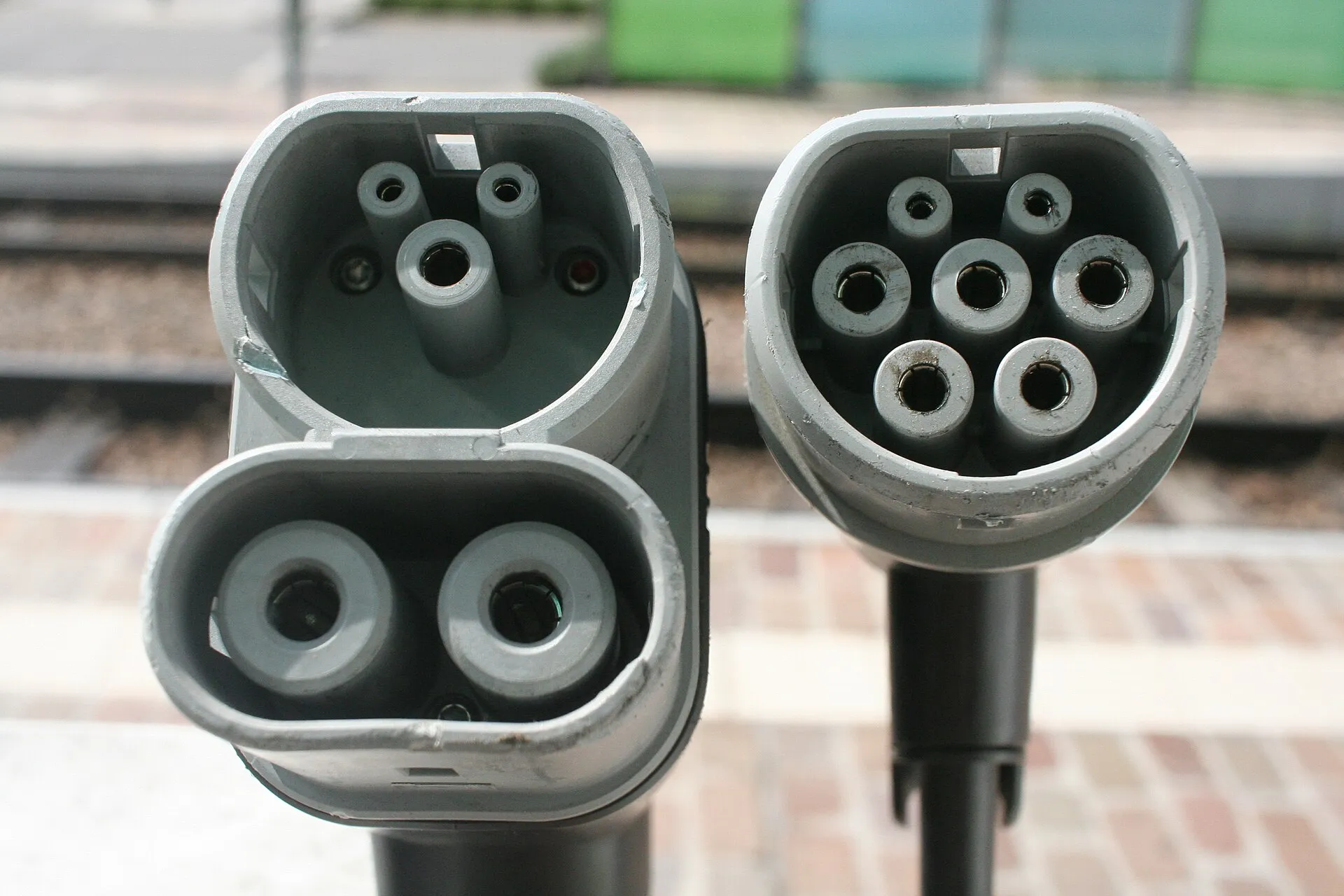
When an electric car plugs in, a quiet negotiation begins. Over the charging cable itself, using power-line communication, the car tells the charger when it needs to leave and how much energy it needs, and the two agree on a schedule. With bidirectional charging, the car can also offer to send power back to the home or the grid.
This works across brands because of a shared standard. ISO 15118-20 defines how car and charger exchange departure times, energy needs and bidirectional schedules. In the EU, new charging points will have to support it from 2027.
That standard turns a parked, plugged-in car into a predictable energy resource. It says nothing yet about the car's other valuable asset: its computer.
Hardware first: the wallbox and the AI gateway
Bidirectional charging is not only a protocol. Sending power back from a car's battery over direct current needs a piece of hardware at home or at the depot: a bidirectional wallbox.
Computing needs its own piece of hardware too. The power-line link in the charging cable runs at around 10 Mbit/s. That is plenty for negotiating a charging schedule, but it will never be usable for computing workloads: models, input data and results need a different, much faster connection.
So a parked car that computes needs an AI gateway next to it: a small local buffer that keeps models and data cached, talks to the car over a fast local link, and connects to the outside world over the building's broadband. Nothing prevents that gateway and the bidirectional wallbox from being one and the same box, installed once, serving both energy and computing.
What is missing in the standards
To use a car's computer safely, the same kind of negotiation would be needed for computing as already exists for energy. That is a control question, and it fits naturally alongside today's charging conversation:
- Availability. When will the car be parked and plugged in, and until when may its computer work?
- Energy budget. How much extra power may computing use, and when is that power cheapest or cleanest?
- Limits. What temperature, battery and wear limits apply, and who decides them?
- Control. Who may start or stop a task, and how is the car always returned to a ready-to-drive state?
The data itself would travel separately, between the car and the AI gateway. In other words: a control plane that extends today's charging dialogue, and a data plane that is new.
Today, neither has a standard. Every attempt would be a proprietary arrangement between one manufacturer and one service.
How computing could fit into V2X
Bidirectional charging already treats the car as a resource with several possible uses in any plugged-in hour: charging for the next trip, powering the home, supporting the grid. Computing could become one more of those uses, scheduled by the same logic:
- Ready to drive comes first and cannot be overridden.
- Vehicle-to-home and vehicle-to-grid follow, where they create value.
- Vehicle-to-AI uses what remains, ideally when power is cheap or comes from local solar.
Seen this way, computing is not a competitor to bidirectional charging but an extension of it: another service drawn from the same plugged-in hours, planned by the same optimiser, bounded by the same limits, and served by the same box on the wall.
What would have to stay true
Any extension of V2X to computing would need to respect principles that the automotive world already lives by:
- Parked only, and fully isolated. Computing runs only while the car is parked and plugged in, never while it is driven. It runs separately from every driving and safety function and stops the moment the car is needed.
- The manufacturer stays in control. Under UN R155, carmakers already manage the cybersecurity of every new vehicle registered in the EU. Any computing workload would sit inside that responsibility, not around it.
- Owners opt in. Nothing runs without the owner's agreement, and the owner's charging plan always wins.
- Data stays where it belongs. The EU Data Act governs access to vehicle data; it does not give anyone a right to use a car's computer. Computing would need its own clear consent and terms.
A conversation worth starting
Standards take years, and the computing side of V2X does not exist yet. But the foundations are being laid now: the protocol that enables bidirectional charging is becoming mandatory on new charging points, bidirectional wallboxes are entering homes and depots, and vehicle architectures for the end of the decade are being designed today.
The right moment to ask how a parked car could offer its computer as safely and predictably as its battery is before those architectures and those boxes are frozen, not after. That is a conversation for carmakers, charger makers, energy providers and standards bodies together.